Beach Wedding Guest: What to Wear on the Sand
Quick Answer: For a beach wedding, wear a flowing midi dress in chiffon or crepe (fabrics that handle wind and humidity), flat elegant sandals or low wedges — never a stiletto, which sinks in sand — and plan for sun and wind from the start with SPF, a secured hairstyle, and sweat-tolerant makeup.
Beach weddings sound like the easy option right up until you’re standing in sand, one heel four inches deeper than the other, holding a dress down with both hands.
Coastal ceremonies have their own physics. Wind, sand, humidity, and glare all get a vote in what works, and the invitation mentions none of them.
Here’s how to dress beautifully for love on the sand — and still be in the photos rather than fighting your outfit through all of them.

What does “beach formal” actually mean?
The setting adjusts the dress code, not the effort. That’s the key thing to understand.
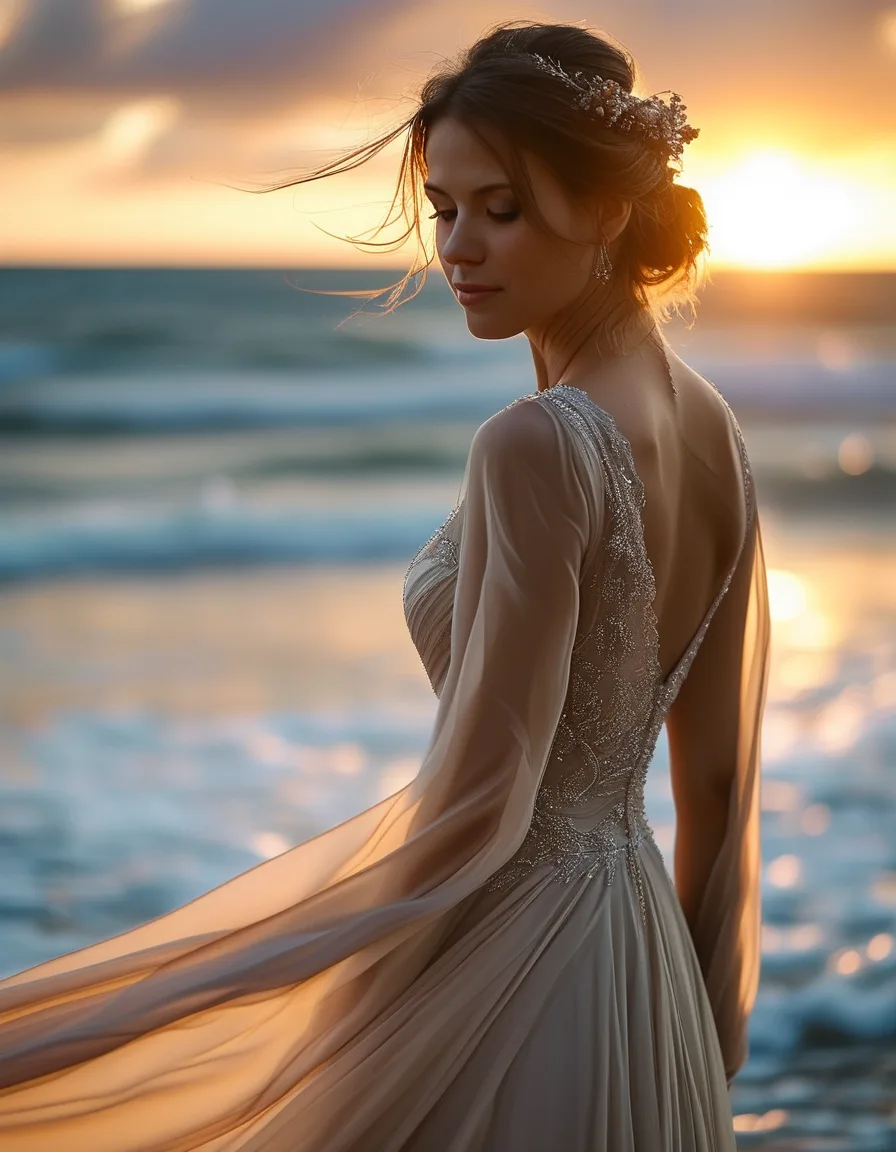
Beach formal means elevated fabrics, elegant lengths, and dressy flat-ish shoes. Think a floor-length or midi dress in chiffon or crepe, real jewelry, and a considered shoe that happens not to have a stiletto heel. It is not an invitation to dress down — it’s the same formality expressed in materials that survive sand and wind.
Beach casual relaxes further: a midi sundress in a good fabric, linen separates, flat sandals. Still not shorts, still not a beach cover-up.
Black tie on a beach happens, usually for a reception moving indoors afterward. Floor-length, proper jewelry, and shoes you can change into once you’re off the sand.
When the invitation is unclear — a flowing midi dress is the universal correct answer. It’s appropriate across every version of the beach dress code, and it’s the safest thing you can pack.
Two rules that hold regardless: don’t wear white, cream, ivory, or champagne, and check whether the couple has named a palette or asked guests to avoid a color.
Which fabrics survive wind and humidity?
This is where beach weddings differ most from any other kind, and the wrong fabric shows publicly.
Fabrics that work:
- Chiffon — light, moves beautifully in wind, doesn’t cling in humidity
- Crepe — has enough weight to behave near water, and resists creasing
- Flowing viscose or poly blends — drape well, dry fast if the sea air is damp
- Cotton voile and light linen blends for casual versions
Fabrics that suffer:
- Heavy satin — shows every fingerprint, holds heat, and creases sitting down
- Clingy silk jersey — humidity turns it into a second skin, visibly
- Anything stiff or structured — fights wind instead of moving with it
- Pale solid colors in delicate fabrics — sea-air dampness and perspiration both show
Prints and mid-tones are the practical choice, because they hide the humidity that a pale solid broadcasts.
Choose movement over structure. A dress with give works with the wind; a dress with architecture fights it, and the wind always wins.

How do I stop the wind from ruining my outfit?
Flowing is beautiful. Too loose is a live broadcast, and beaches are reliably windier than the forecast suggests.
What behaves near water:
- Midi lengths. Long enough to be elegant, short enough not to catch like a sail. The sweet spot.
- Wrap styles that actually tie — a real, secured tie, not a decorative one held by a single snap.
- Skirts with some weight or a lined underlayer, which keeps the hem down.
- Dresses with any built-in structure at the waist, which stops the whole garment from lifting.
What to avoid: very lightweight full-circle skirts, wide unsecured wrap fronts, halter necks in slippery fabric, and strapless anything you’ll spend the ceremony adjusting.
The practical test before you commit: put it on, stand in front of a fan on medium, and see what happens. Slightly ridiculous, entirely effective.
A dress you fight all ceremony wins no photos. If you’re managing the garment, you’re not in the moment — and that’s visible in every candid shot.
What shoes work in sand?
Not heels. A stiletto exerts enormous pressure on a tiny area and sinks straight into sand or aerates a lawn on every step.
What works:
- Flat elegant sandals — metallic, embellished, or fine leather. Dressy without a heel.
- Low wedges or block heels — the wide base distributes weight and stays on the surface. The best option if you want some height.
- Barefoot with an anklet or a barefoot sandal, if the couple has invited it. Many beach ceremonies explicitly do.
- Espadrille wedges for the casual end of the code.
The two-shoe strategy is the professional move: flats or wedges for the sand ceremony, and a pair of heels in your bag for a paved or indoor reception. Almost every beach wedding has this exact transition built into it.
Walk-in beauty beats hobble-in glamour, and nobody is examining your shoes on sand anyway — they’re mostly buried.
How do I handle sun, sweat, and hair?
Plan for the elements at the start rather than fixing things at the reception.
Sun: SPF as an actual base layer, applied 20 minutes before you leave — not in the car. For an afternoon ceremony, add a chic wide-brim hat or good sunglasses. Reapply before the reception, because a sunburn arriving in the photos is a very common beach-wedding outcome.
Hair: wind-proof it. A low bun, a braid, or a deliberately tousled style that’s meant to move. What doesn’t work is a smooth blowout worn down — 15 minutes of coastal wind and it’s gone. Bring extra pins and a small hairspray.
Makeup: light and sweat-tolerant. Waterproof mascara, a long-wear base rather than a full coverage one, cream products over powder in humidity, and a lip color you don’t have to check. Blotting papers in the bag.
Also worth packing: a light wrap for when the sun drops (coastal evenings fall 10–15°F fast), bug spray for dusk ceremonies near water, and a small towel or wipe for sandy feet before you put shoes back on.
Glow with the elements, not against them. Beach weddings reward people who accepted the conditions in advance.
5 Mistakes Everyone Makes at Beach Weddings
- Wearing stiletto heels. They sink. Every step. For the entire ceremony.
- Choosing heavy satin. It creases, it holds heat, and it looks worse by the hour.
- A blowout worn down. Gone in fifteen minutes, and there’s no fixing it on a beach.
- Forgetting the evening temperature drop. Coastal evenings fall fast — a light wrap saves the reception.
- Skipping the wind test. Nobody does this, and it’s the one that produces the ceremony spent holding a hem with both hands.
FAQ
What should a woman wear to a beach wedding?
A flowing midi or maxi dress in chiffon or crepe, in a print or mid-tone color, with flat elegant sandals or a low wedge. Add a light wrap for the evening and a hat or sunglasses for an afternoon ceremony. Avoid white, ivory, and champagne.
Can I wear heels to a beach wedding?
Not stilettos on sand — they sink immediately. Low wedges and block heels work because the wide base spreads your weight. The best approach is flats or wedges for the ceremony with heels packed for a paved reception.
What colors should I avoid at a beach wedding?
White, ivory, cream, and champagne, as at any wedding. Also worth reconsidering: very pale solid colors in delicate fabrics, which show sea-air dampness and perspiration clearly. Prints and mid-tones are both more forgiving and more photogenic in bright coastal light.
Is a jumpsuit okay for a beach wedding?
Yes, and it’s a genuinely smart choice — no hem to manage in wind, and it handles sand well. Choose a flowing wide-leg style in crepe or a soft blend rather than a structured one, and dress it up with jewelry and a good sandal.
What should I bring in my bag?
SPF for reapplication, extra hairpins, blotting papers, a light wrap, a small towel or wipe for sandy feet, bug spray for a dusk ceremony, and a second pair of shoes if the reception moves indoors.
TL;DR:
- Flowing midi dress in chiffon or crepe is the universal correct answer
- Prints and mid-tones hide humidity; heavy satin and clingy silk suffer publicly
- Midi length, secured wraps, some weight in the hem — do the fan test before you commit
- Flat sandals or low wedges on sand; pack heels for a paved reception
- SPF before you leave and again before the reception; low bun or braid for wind
- Pack a light wrap — coastal evenings drop 10–15°F
Dress with the coast instead of against it, and every photo — posed or candid — comes out golden.
Keep Reading
This article is for general styling and informational purposes only. Trends, sizing, availability and pricing may vary by brand and season.