How to Actually Decode a Vague Wedding Dress Code Instead of Guessing
Quick Answer: The dress code term alone is genuinely ambiguous — “cocktail attire” covers a wide range. Resolve it by checking four other signals: venue type, start time, invitation formality, and the couple’s own visible style. Venue and time carry the most weight, because they most directly reflect how formal the day will actually feel.
The invitation says “garden party attire.”
You have now spent twenty minutes on the internet and emerged with three mutually incompatible interpretations, one of which involves a hat. You are considering texting the bride, which everyone agrees you shouldn’t do and everyone does anyway.
Here’s the thing: the dress code term is genuinely vague. But it’s almost never the only signal you have — and the other signals are sitting right there on the invitation.

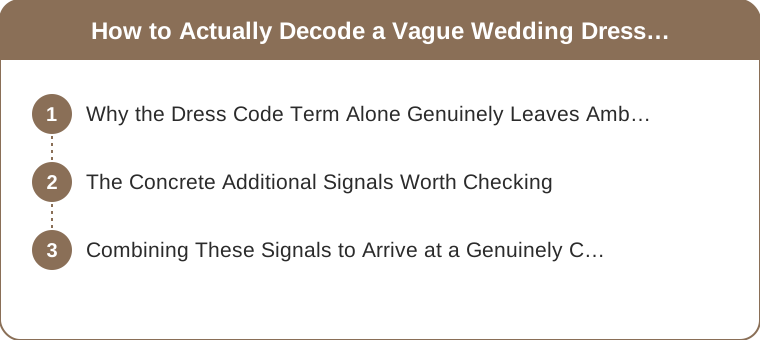
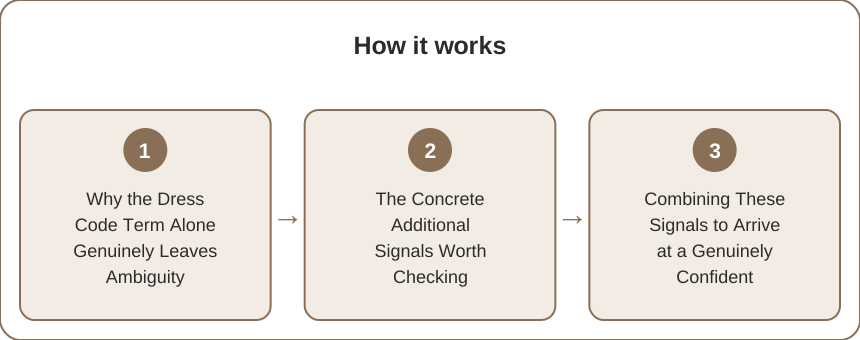
Why Is the Dress Code Term Alone So Unhelpful?
Because these terms cover genuinely wide ranges, and different couples mean different things by them.
“Cocktail attire” can reasonably mean a knee-length dress with heels at a hotel ballroom, or a nice jumpsuit and sandals at a converted barn. Both are correct interpretations of the same two words. “Garden party” ranges from a floral midi and block heels on a lawn to something considerably dressier at a formal estate.
There’s regional variation too. The same term skews meaningfully more formal in some places than others, and international weddings widen the gap further.
So the term gives you a rough direction and genuinely does not pin down the specifics — not the formality level, not the appropriate fabrics, not whether you’ll be overdressed or underdressed by a full notch.
Which is exactly why guessing from the term alone produces so much anxiety. You’re trying to extract precision from a word that doesn’t contain it.

What Other Signals Should You Actually Check?
Four of them, all available without texting anyone.
1. Venue type — the strongest single signal. A historic estate, hotel ballroom or private club sets a formality floor regardless of what the invitation says. A backyard, brewery, barn or beach sets a ceiling. Look the venue up; two minutes on their website tells you more than the dress code line does.
2. Start time — the second strongest. Evening weddings run more formal than daytime ones, essentially universally. A 6 p.m. ceremony and a 1 p.m. ceremony at the same venue call for different interpretations of identical wording. Anything starting at or after 6 p.m., dress up a notch.
3. Invitation formality. A thick letterpress card with an inner envelope is telling you something. So is a designed digital invite with a photo and a casual font. The couple’s aesthetic choices in the invitation reliably track their aesthetic choices for the day.
4. The couple’s own visible style. Their wedding website, if they have one, often has decor photos, a color palette or a mood board. Their own social media shows how they and their friends actually dress. This is the tiebreaker when the first three signals disagree.
Bonus signal: if you know other guests, what they’re wearing is real data. Not a rule, but a genuine calibration.
5 Mistakes Everyone Makes Decoding a Dress Code
1. Reading the term in isolation. The single biggest one. Two words carrying a decision they can’t support, while four better signals go unchecked.
2. Ignoring the venue’s actual surface. Grass, sand, gravel and cobblestones all eat stiletto heels. A garden ceremony means block heels or wedges, no matter how formal the rest of it is. This is the third mistake that surprises even seasoned wedding guests, because they solve for the dress and forget the ground.
3. Forgetting the day has multiple parts. An outdoor ceremony at 4 p.m. and a dancing reception at 10 p.m. are different environments and different temperatures. Layers aren’t a compromise — they’re the correct answer.
4. Over-interpreting the “no white” rule and stopping there. White is out, obviously. But also check whether the wedding party colors are stated anywhere, and be thoughtful about anything that reads as bridal — heavy cream, ivory lace, full-length white-adjacent anything.
5. Aiming for the exact middle of the range. When signals genuinely conflict, aim slightly dressy rather than the average. Overdressed reads as respectful; underdressed reads as indifferent, and only one of those is fixable on the day.
How Do You Combine the Signals Into a Decision?
Weight them, don’t average them.
- Start with the dress code term to establish the broad range.
- Use venue type and start time to pick a point within that range. These two carry the most weight because they most directly determine how formal the event will actually feel in the room.
- Use invitation formality to nudge up or down half a step.
- Use the couple’s style as the tiebreaker when the others don’t agree.
- Then solve the practical layer: the ground you’ll stand on, the temperature at the ceremony versus the reception, and whether you intend to dance.
Worked example: “Garden party attire,” historic estate, 6 p.m. start, letterpress invitation. Venue says formal, time says formal, invitation says formal — so this is the dressy end of garden party. A midi or long dress in a good fabric, block heels for the lawn, a wrap for after sunset.
Same term, backyard, 2 p.m., designed digital invite? A floral midi, flat sandals or wedges, and something over your shoulders for later.
One practical note that has saved a lot of evenings: whatever you land on, plan the getting-there and the getting-home separately. Travel in something comfortable — a pair of high waist leggings and flats in the car, change at the venue — and you arrive uncreased rather than having spent ninety minutes in a fabric that doesn’t forgive sitting.
FAQ
What does “cocktail attire” actually mean for a wedding?
Broadly, a knee-length or midi dress, a dressy jumpsuit, or a smart separates combination — dressier than everyday, less formal than a gown. Where you land within that range should come from venue and time rather than the term, since cocktail at a 7 p.m. hotel reception is a different outfit from cocktail at a 2 p.m. winery.
Is it better to be overdressed or underdressed at a wedding?
Overdressed, reliably. It reads as taking the occasion seriously, and it’s easy to soften by removing a jacket, changing shoes or dressing down the accessories. Underdressed can’t be fixed once you’re there, and it’s the one people actually remember feeling bad about.
Can I just ask the couple what to wear?
You can, and one polite message is fine — but they’re fielding a lot of these, and it’s kinder to ask a bridesmaid, a family member or another guest instead. Checking venue, time and the wedding website usually answers it before you need to ask anyone.
TL;DR
- The dress code term is genuinely vague and can’t carry the decision alone.
- Four better signals: venue type, start time, invitation formality, the couple’s own style.
- Venue and time carry the most weight — they determine how formal the day actually feels.
- Evening = dress up a notch. Grass, sand or cobblestones = block heels, always.
- Plan for the whole day — outdoor ceremony, cool evening, dancing. Layers are the answer.
- When signals conflict, aim slightly dressy. Overdressed is fixable; underdressed isn’t.
Keep Reading
This article is for general styling and informational purposes only. Trends, sizing, availability and pricing may vary by brand and season.